
Now in the window
Black Winter Day
A warm magazine for good evenings in: films and indie cinema, TV and streaming, music, dance, games, home and garden projects, and the parties that bring people together.



The counter recommends10

Cat. no. BWD/049
Picked at the counterHome
Moving to a Smaller Home in Augsburg: Plan the Furniture Before the Boxes
2 min
When a move means less space, the instinct is to start packing straight away. Boxes feel like progress. Yet the decisions that shape a downsizing move are about furniture, not crockery. Working out which large pieces fit the new home, and which do not, before filling a single carton saves time, money and a lot of awkward moments on moving day.
Measure the new rooms, then imagine living in them
Get accurate measurements of every room in the new flat or house, including door widths, stairwells, window positions, radiators and built-in units. Then sketch a rough plan of where the main pieces could go. A sofa that technically fits between two walls may still block a door or leave no room to walk past. Think about clearance for opening wardrobe doors, pulling out chairs and reaching windows.
Next, consider how the household actually lives. A favourite armchair for reading or a desk used every working day may matter more than a large dining table brought out twice a year. The aim is not to get rid of things for the sake of it, but to keep the pieces that support everyday life in the new space.
Give every large item a status
A simple list makes the process manageable. Note each large item with its measurements, a photo if helpful, and one of three labels:
- Moving: confirmed for the new home with a place already planned.
- Undecided: still being discussed or waiting on measurements.
- Going elsewhere: to family, a buyer, a donation centre or a collection service.
Keep the list up to date. Anything marked as going elsewhere is only truly sorted once someone has confirmed the collection. Until then, it is still part of the move and needs a plan.
Share the plan with the removal team
A clear inventory helps the movers quote accurately, choose the right vehicle and bring the right equipment for disassembly or tight stairwells. Local firms know the city's streets, parking rules and older buildings, which is valuable in neighbourhoods with narrow access. Households planning a move often contact Umzugsunternehmen Augsburg to talk through their furniture list, and details such as opening hours and directions can be checked on the company's Google Business Profile / Google Maps listing before booking a viewing or survey.
Only then start packing
With the furniture decided, packing becomes far easier. Each box can be labelled for a specific room in the new home, and there is no risk of carefully wrapping items for a cabinet that will not be making the trip. Pack rooms with the most uncertain contents last, and keep a box of essentials such as tools, chargers, toiletries and bedding for the first night.
Arriving in the new space
On moving day, tape a printed floor plan to the door of each room so the team knows where every piece goes. Place large furniture first, then unpack boxes around it. A smaller home that has been planned this way tends to feel settled quickly, with room to move and a place for the things that matter most.
Removal firm in Augsburg
Umzüge Augsburg | Ihr Umzugsunternehmen Augsburg · Partnachweg 1, 86165 Augsburg, Germany · +49 821 56734816

Cat. no. BWD/046
Picked at the counterEntertainment
Turn Up the Music: The Joy of Karaoke Nights Around Magok and Balsan
2 min
Every good karaoke night has a shape, much like a live gig. There is a warm-up while people are still taking their coats off, a stretch in the middle where the room catches fire, and a gentle comedown when someone chooses the slow song that sends everyone home humming. Around Magok and Balsan, where noraebang sit within a few minutes of dinner and the subway, it is easy to build an evening that follows that arc.
The warm-up: songs everyone half knows
Nobody should open with a vocal marathon. The first few tracks are about loosening up, so choose songs with short verses and big, obvious choruses. Upbeat K-pop that has played in every café for months, a sing-along from a film soundtrack or an old pop hit with a chant in the middle all do the job, because the whole room can join in without anyone carrying the tune alone.
This is also the moment to sort out the practical bits: the remote, the volume, the tambourines, a drink for everyone. Choosing the room with care helps here, and browsing a local venue's own page such as https://salonglendas.com beforehand gives the group something to look forward to and a clearer idea of where they are heading.
The peak: duets, dance breaks and the big ballad
Somewhere in the second half hour, the energy usually lifts. That is the time for:
- Duets that pull in someone who has not sung yet.
- Dance tracks where half the room ignores the lyrics and copies the choreography on screen.
- One dramatic ballad, performed with full commitment and eyes closed, ideally by the person least expected to choose it.
- A throwback from the year most of the group finished school, which is bound to start a round of stories.
Keep the queue moving so nobody waits too long between turns. A thoughtful unofficial host quietly nudges a quieter friend's song up the list.
The encore and the comedown
When the timer on the screen starts counting down the final minutes, pick something everyone can sing together rather than a solo. A slower track makes a fine closer; it calms the room and gives people a moment to catch their breath before the night air.
Plan the trip home before that last song, not after it. Check when the final trains leave the nearest station, arrange a taxi for anyone heading in a different direction, and make sure nobody who has had a drink is planning to drive. A short walk past the late-opening shops is often the best way to let the music fade.
Why the format keeps pulling people back
Private rooms remove the fear of an audience, which is why so many people who would never sing in public end up fighting over the microphone. In neighbourhoods like these, with offices, homes and restaurants packed close together, karaoke becomes part of an ordinary week rather than a once-a-year event. That, more than any sound system, is what turns a handful of songs into the evening people are still talking about on Monday.

Cat. no. BWD/045
Picked at the counterEntertainment
Upgrade Your Graphics Workflow With Image to SVG Conversion
2 min
Every creative project eventually hits the same snag: a logo that looked fine on a website turns fuzzy on a banner, or an icon needs a new colour and the only copy is a flattened PNG. Pixel-based files are excellent for photographs, but they struggle when artwork must stretch, shrink or change. That is where scalable vector graphics earn their place.
Pixels versus paths
A JPG or PNG stores a grid of coloured dots. Enlarge it and the dots get bigger, which shows up as blur or jagged edges. An SVG describes shapes mathematically, as lines, curves and fills, so the image is redrawn crisply at any size. The same file can serve as a tiny favicon and a large print without losing sharpness.
| Raster (JPG, PNG) | Vector (SVG) | |
|---|---|---|
| Best for | Photos and complex textures | Logos, icons, diagrams, line art |
| Scaling | Loses quality when enlarged | Stays sharp at any size |
| Editing colours | Often requires repainting | Change a fill value |
| On the web | Fixed resolution | Crisp on high-density screens |
Where conversion pays off
Many teams have a back catalogue of artwork trapped in raster form: scanned sketches, old logos exported years ago, badges and simple illustrations. Converting suitable pieces to SVG turns them into reusable building blocks. Designers can recolour them for a seasonal campaign, developers can drop them into a website and adjust them with code, and print partners get files that scale cleanly. A browser-based tool to convert image to svg makes this quick, tracing the shapes in an uploaded image and returning a vector file ready for editing.
A simple workflow
- Pick the right source. Clean, high-contrast artwork with clear edges traces best. Photos and soft gradients are better left as raster images.
- Prepare the image. Crop away background clutter and, if possible, boost contrast so outlines are distinct.
- Convert. Run the tracing and compare a few settings if the tool offers them, such as the number of colours or the level of detail.
- Tidy the result. Open the SVG in a vector editor, remove stray specks, merge shapes that belong together and simplify overly complex paths.
- Name and store it. Save the master file in a shared library with clear naming, so everyone uses the same version.
Keeping files lean
A traced vector can carry more points than it needs. Simplifying paths, removing hidden layers and running the file through an optimiser keeps it small, which helps pages load quickly. Check the result at different sizes before publishing; tiny details can disappear at icon size and may need a simplified variant.
The bigger benefit
The real gain is consistency. When a brand mark or diagram lives as one clean vector file, every team works from the same source, edits are faster and nothing drifts off-brand between the website, the presentation and the printed flyer. For a design workflow that has to deliver across many formats, that is a very practical upgrade.

Cat. no. BWD/043
Picked at the counterHome
The Homeowner's Guide to Stress-Free Deck Building with Professional Contractors
2 min
A new deck is one of the most enjoyable home projects to imagine. You picture summer dinners, morning coffee and friends spilling out of the kitchen on a warm evening. The stressful part usually arrives later, when budgets, permits, material choices and scheduling all land at once. With the right preparation and a good professional team, it does not have to feel that way.
Picture how you will use it
Start with the life the deck should support rather than its dimensions. A place for a big dining table and a grill needs different space and layout than a quiet reading corner. Think about:
- Who uses it: a couple, a busy family, or regular groups of guests?
- When: evenings only, all day, or into the cooler months?
- What goes on it: dining set, lounge chairs, planters, a hot tub?
- Sun and privacy: where the shade falls and what neighbours can see.
Answers to these questions shape the size, the height, the position of stairs and whether you need a roof, pergola or privacy screen.
Materials and features
| Option | Appeal | Trade-off |
|---|---|---|
| Natural wood | Warm look, classic feel | Needs regular sealing or staining |
| Composite boards | Low maintenance, consistent colour | Higher upfront cost, different feel underfoot |
| Covered deck | Usable in rain and strong sun | More structural work and planning |
Built-in benches, lighting along the steps and integrated planters add comfort and are easier to include from the start than to retrofit later.
Finding a contractor you trust
The cheapest quote is rarely the deciding factor in a smooth project. Look for a builder who visits the site, asks about how you will use the space, and explains choices in plain language. Ask to see completed projects, check that they carry appropriate insurance and any licences required where you live, and request a written quote that breaks down materials, labour and timeline.
Homeowners in the South Sound area who want shelter overhead often look for a covered deck builder tacoma team that handles design, structure and finishing together, so a single crew owns the whole project from the first drawing to the final railing.
Permits and the build itself
Many decks need a building permit, especially raised or covered ones. An experienced contractor usually knows the local process and can prepare the drawings. Once approved, construction tends to follow a clear sequence: site preparation, footings, framing, decking, railings and stairs, then finishing details. Weather can shift the schedule, so build a little flexibility into your expectations.
Good communication keeps stress low. Agree on how updates will be shared, who to call with questions, and how changes to the plan will be priced before work begins.
Before the first party
- Walk the finished deck with the contractor and note anything to adjust.
- Ask for care instructions for the boards and fixings you chose.
- Keep the paperwork, including warranties and permit sign-off.
Plan carefully, choose a builder who listens, and the only thing left to organise is the guest list for the first barbecue.

Cat. no. BWD/037
Picked at the counterEntertainment
How IPTV Makes Watching International Channels Easier in the Netherlands
2 min
Walk down any street in Amsterdam, Rotterdam or Eindhoven and the mix of languages is obvious. The Netherlands is home to large communities with roots in Turkey, Morocco, Suriname, Poland, India and dozens of other places, along with tens of thousands of international students and expat professionals. For many of them, Dutch television is only half the picture. They also want news, comedy and sport from the place they grew up, and internet television has made that remarkably easy to arrange.
Why international channels matter
Watching television from home is about more than entertainment. It keeps children in touch with a heritage language, lets grandparents follow familiar programmes, and gives newcomers a sense of continuity while they settle in. Traditional packages in the Netherlands tend to offer only a handful of foreign channels, usually as extra-cost add-ons. Delivering television over broadband removes many of those limits, because a provider can carry a much broader international selection without needing space on a cable network.
What different households look for
| Household | Typical wishes |
|---|---|
| Expat professionals | English-language news, home-country sport, films in original language |
| Families with heritage ties | Children's channels and series in the family language |
| International students | A low-commitment app on a laptop or phone |
| Mixed Dutch and international couples | NPO and local channels alongside foreign favourites |
Practical advantages day to day
Internet television puts channels from many countries into a single programme guide, so there is no need to switch inputs or juggle separate boxes. Catch-up features solve the time-zone problem neatly: a talk show broadcast in the evening in another country can be watched at a convenient hour in the Netherlands. On-demand libraries add films and series from abroad that would rarely appear on Dutch schedules.
The same account usually works on a smart TV, a streaming stick, a laptop and a phone. That suits the Dutch habit of watching on the train, and it means students moving between rooms or cities can take their television with them.
Getting set up
Most homes in the Netherlands have broadband fast enough for smooth high-definition viewing, so setup is usually straightforward: install the app, sign in, and build a favourites list. Services tailored to the Dutch market, such as IPTV Nederland, gather local and international channels into one place, which makes it simple to keep Dutch news and a home-country lineup within reach of the same remote.
When comparing options, look at the specific countries and languages included, the devices supported and the quality of customer help. Choosing a provider that is properly licensed for the Netherlands also keeps the service reliable and supports the broadcasters behind the programmes.
A small change with a big effect
For a family far from home, being able to switch on a familiar channel on a Sunday morning can feel surprisingly important. Internet television turns what used to be an expensive, fiddly arrangement into something almost ordinary, and that is exactly why it has caught on across the country.
Cat. no. BWD/029
Picked at the counterEntertainment
How IPTV Brings Swiss Viewers More Choice, Flexibility, and Control
2 min
Switzerland has always been a tricky place to build a one-size-fits-all television package. A household in Lugano wants Italian-language news, a flat in Basel may lean towards German and French, and plenty of families mix all three with English films and international sport on top. Internet-delivered television handles that variety far more gracefully than a fixed cable lineup, which is a big part of why it has settled into so many Swiss living rooms.
A lineup shaped by language, not geography
With conventional broadcasting, what a home received often depended on the region and the operator serving it. Streaming over a broadband line removes most of that link. Viewers can assemble a mix of national broadcasters, neighbouring-country channels and specialist networks in whichever languages the household actually speaks.
That matters for bilingual couples, for families who moved from abroad, and for anyone who simply prefers watching a film in its original language. Children's channels, documentary networks and sports feeds can sit side by side in one menu instead of being split across add-on bundles.
Control features people end up relying on
Choice is the headline, but the everyday appeal tends to come from the small controls that change how an evening runs:
- Replay and catch-up. A news bulletin or match missed during dinner can be started from the beginning later.
- Pause and rewind on live channels. Handy when the doorbell rings at a crucial moment.
- Profiles and favourites. Each family member can keep a personal list rather than scrolling past everyone else's picks.
- Parental settings. Age filters and PIN locks let parents decide what younger viewers can open.
- Multi-device access. The same subscription can follow viewers from the television to a tablet in the kitchen.
Built for Swiss connections
Fibre and fast DSL now reach a large share of Swiss homes, and that infrastructure is what makes high-definition streaming feel ordinary. In areas where speeds are more modest, many apps let viewers lower the picture quality to keep playback smooth, which is a practical compromise for chalets and holiday flats.
Providers focused on the local market, such as IPTV Suisse, put together channel selections and apps with this multilingual, multi-device audience in mind, so setting up a living-room box or smart-TV app is usually a matter of minutes.
Choosing with care
As with any subscription, it pays to compare what is included, how support works and whether a trial period is available. Viewers should also pick services that are properly licensed for the content they distribute in Switzerland, which keeps the experience reliable and fair to the people who make the programmes.
The bigger shift is one of attitude. Television in Switzerland is no longer something that happens at fixed times on fixed channels. It has become a flexible library that each household arranges around its own languages, schedules and tastes, and that sense of control is what keeps viewers coming back.

Cat. no. BWD/019
Picked at the counterEntertainment
Switching From Cable to IPTV: A Practical Guide for Viewers
3 min
Leaving a cable package after many years can feel like moving house: you know the new place will suit you better, but the packing looks daunting. Broken into steps, though, the change to internet-delivered television is mostly a matter of preparation. Here is a sequence that works for most households.
Step 1: Take stock of what you really watch
For one ordinary week, jot down what gets switched on and by whom. Note the live programmes that matter (news, a weekly quiz, a football club), the series people binge, and the screens they use. Most families find their viewing centres on a small group of channels plus a pile of on-demand shows. That list becomes your shopping list and stops you paying for a bundle full of channels nobody opens.
Step 2: Get the home network ready
Internet television is only as steady as the connection behind it. A few changes make a big difference:
- Run an Ethernet cable to the main television if you can; it is the most reliable link.
- Place the router somewhere central and raised, not inside a cabinet or behind the TV.
- Update router firmware and, in busy apartment blocks, try a less crowded Wi-Fi channel.
- Test speed in the evening, when everyone is online, rather than at midday.
Consistency matters more than a headline speed figure. A line that holds steady through a full match beats one that is fast in bursts.
Step 3: Try it on the devices you already own
Smart televisions often have the app built in, which makes setup quick, although older models may stop receiving updates. A compact streaming box usually keeps menus responsive for longer and costs far less than a new screen. Phones and tablets make excellent second screens and can cast to the television. Use a trial period to test each device before buying anything new. In Belgium, a service such as IPTV Belgique works across smart TVs, boxes and mobile devices, so the household can compare how each screen feels in daily use.
Step 4: Replace the recorder
Many cable customers worry about losing their recorded programmes. Internet services handle this differently: replay windows keep recent broadcasts available, cloud recording stores shows without a hard drive in the living room, and pause-live lets you step away during a broadcast. Before switching, write down any recordings you want to keep and watch them while the old box still works.
Step 5: Compare the full cost, then make the move
| Item | Questions to ask |
|---|---|
| Broadband | Will the current plan cope, or is an upgrade needed? |
| TV subscription | Monthly or long contract? What is included as standard? |
| Extras | Are sport, film or multi-room options separate add-ons? |
| Hardware | Is a box included, rented or bought outright? |
Then make the move cleanly
Check the notice period on the cable contract and any equipment that must be returned. Keep both services running for a short overlap so nobody misses a favourite programme during the changeover. Finally, confirm that the new provider is properly licensed in your country and has clear terms and reachable customer support; legitimate services are the ones that stay stable over the long run.
Done in this order, the switch is less a leap than a series of small, sensible decisions, and the reward is television that fits the way the household actually watches.
Cat. no. BWD/008
Picked at the counterHome
Shedding Light on Your Kitchen: Choosing the Best Under Cabinet Lights for Your Home
3 min
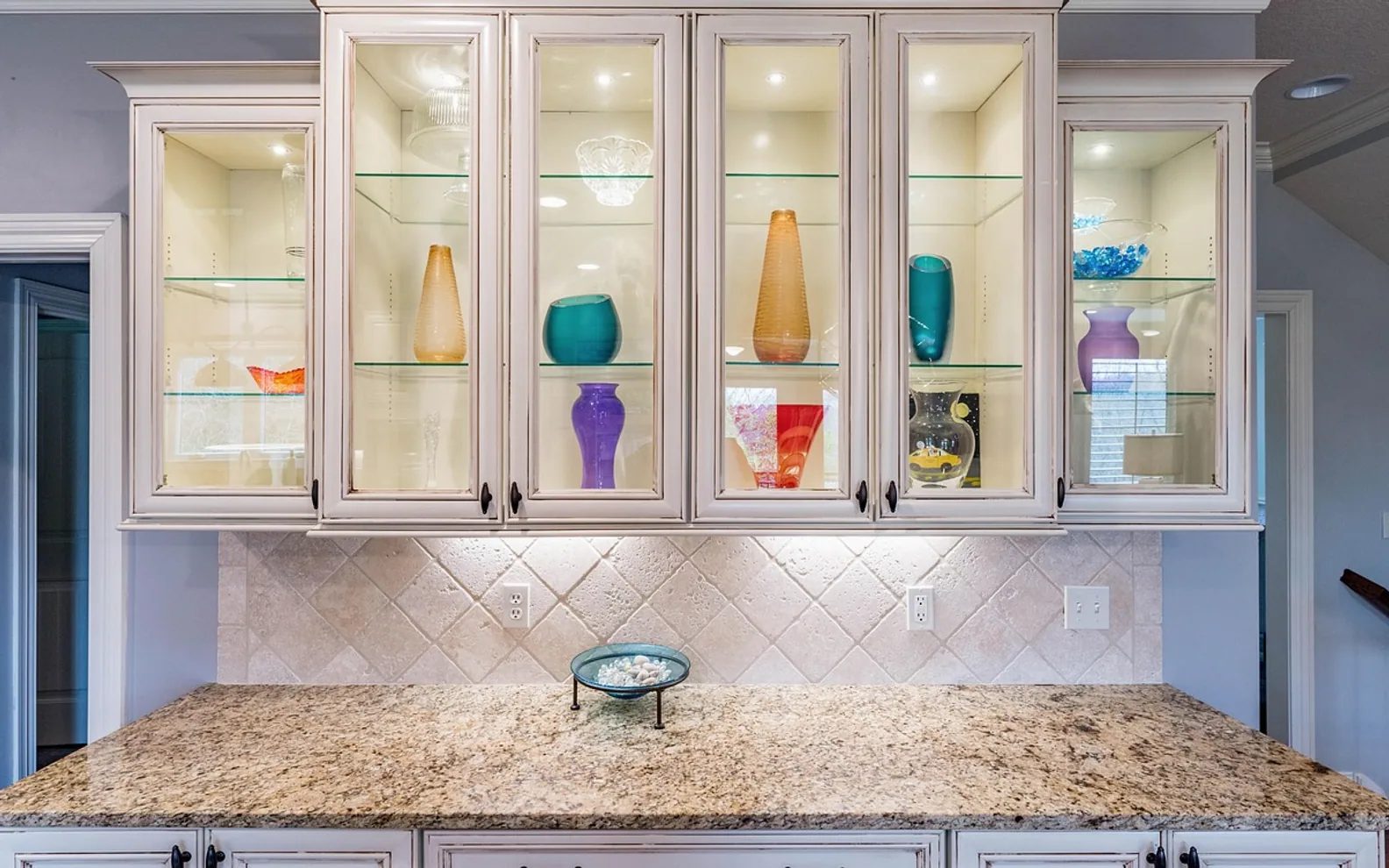
Ceiling lights have one awkward habit in the kitchen: they sit behind you, so your own shoulders cast a shadow over the chopping board. Lights mounted beneath the wall cabinets fix that in a single move. They throw light straight onto the counter, make the backsplash glow in the evening and give the whole room a softer, more finished feel when the main lights are off.
The choice can look crowded at first, but it narrows quickly once you know what each style does well.
The main styles at a glance
| Style | Best at | Worth knowing |
|---|---|---|
| LED strip | Even, continuous light along long runs | Flexible and slim; a diffuser channel hides the individual dots |
| Puck | Focused pools of light | Great for accents and display shelves; can leave gaps between pools |
| Bar / linear fixture | Clean, uniform task light | Comes in set lengths that often link together |
| Battery-powered | Quick upgrades with no wiring | Ideal for renters; batteries need changing or recharging |
Start with how you use the counter
A baker who rolls dough on the same stretch of worktop every weekend needs bright, even light there, so a strip or bar running the full length of the cabinet makes sense. Someone who mainly wants a gentle glow for late-night tea might prefer a few dimmable pucks. Corner coffee stations, open shelving and glass-front cabinets all benefit from pucks or short bars that highlight one spot rather than flooding the room.
Mount the fittings toward the front edge of the cabinet rather than against the wall. The light then lands where your hands work instead of only washing the tiles.
Colour, brightness and control
Colour temperature changes the mood more than people expect. Warmer white tones feel cosy and suit wood, cream and brass; cooler whites look crisp against white gloss, steel and stone and make it easier to judge food colour while cooking. Many modern fittings let you switch between tones, which is useful in an open-plan space that doubles as a dining area.
Dimming is the other feature worth paying for. Full brightness for prep, low light for evenings, and a night-light setting for a midnight glass of water all come from the same fittings. Motion sensors are handy too: walk in with full hands and the counter lights itself, then switches off when the kitchen is empty.
Plug-in, hardwired or battery
Hardwired systems give the tidiest result, with no visible cables and a single wall switch; they are a job for a qualified electrician. Plug-in kits suit kitchens with a convenient outlet near the cabinets and are an easy weekend project. Battery and rechargeable units need no tools beyond a screwdriver or adhesive pads and are the friendliest option for rented homes.
For a wide selection in one place, the under cabinet lighting range from a dedicated lighting maker brings strips, pucks and linkable bars together, which makes it easier to match fittings across a whole kitchen in one finish and colour temperature.
A quick planning checklist
- Measure each cabinet run and note where outlets and switches sit.
- Decide whether you want continuous light, spots, or a mix of both.
- Pick one colour temperature for the whole room so the counters look consistent.
- Check the fittings are rated for kitchen use and easy to wipe clean.
- Plan cable routes before mounting anything so wires stay hidden.
Get these basics right and the result feels built-in rather than added on: brighter prep, a warmer room at night and a kitchen that looks good from the sofa as well as at the stove.

Cat. no. BWD/005
Picked at the counterHome
Mastering Portable Cooling: Power Considerations for Aircon Units
2 min
Portable air conditioners solve a lot of problems. They cool a spare room without installation, rescue a marquee wedding on a sticky afternoon and keep a pop-up stage bearable for performers. What they cannot do is run on goodwill. Every unit draws a fair amount of electricity, and the most common reason a cooling plan fails is not the machine itself but the power supply behind it.
Read the rating plate first
Each unit carries a label listing its voltage, current draw in amps and power in watts. These figures tell you what kind of socket and circuit it needs. Household models are designed for standard domestic outlets, while larger commercial or event units may require a dedicated circuit or a different connector altogether. Checking this before delivery avoids the awkward moment when a powerful unit arrives and there is nowhere suitable to plug it in.
Know what else shares the circuit
A single wall socket rarely stands alone. It often shares a circuit with lights, speakers, kettles or catering equipment. Add a portable aircon to an already busy circuit and the breaker may trip just as guests arrive. A few practical steps help:
- Find out which sockets are on which circuit, ideally with help from the venue or an electrician.
- Give each cooling unit its own circuit where possible.
- Avoid daisy-chaining extension leads or multi-plug adaptors.
- Use heavy-duty, properly rated outdoor cables for tents and gardens.
Match cooling capacity to the space
Cooling capacity, often listed in BTU or kilowatts, should fit the room or tent. Too small and the unit runs flat out without ever reaching a comfortable temperature, using power all the while. Too large and it cycles on and off inefficiently. Ceiling height, direct sunlight, open doors, lighting rigs and the number of people present all add heat, so a crowded dance floor needs much more cooling than an empty room of the same size.
Efficiency ratings help compare units. A more efficient model delivers more cooling for each unit of electricity, which matters both for bills and for keeping within the limits of a venue's supply.
Planning for events and outdoor sites
Outdoor venues and temporary structures add their own questions. Is there mains power close by, or will a generator be needed? If so, the generator must be sized for the starting surge of the compressors, not just their running load. Exhaust hoses need a route outside, and condensate water needs somewhere to drain safely away from walkways and cables.
For these situations, renting can be easier than buying, because an experienced supplier can advise on unit sizes and power needs for the specific setting. In Southeast Asia's heat, many organisers turn to aircon rental Singapore services that handle delivery, setup and collection for parties, exhibitions and tented celebrations.
A quick pre-event checklist
- Confirm the unit's electrical requirements against the available outlets.
- Map circuits and spread the load.
- Plan hose routes and drainage.
- Switch units on early to pre-cool the space.
- Keep a contact for technical support on the day.
With power sorted in advance, portable cooling becomes what it should be: a quiet background comfort that lets everyone enjoy the occasion.

Cat. no. BWD/004
Picked at the counterEntertainment
Captivating Audiences: The Power of Digital Display Screens for Advertising
2 min
Walk into a cinema foyer and the first thing that catches the eye is rarely a printed poster. It is a moving trailer loop, a countdown to the next premiere or a menu board glowing above the popcorn counter. The same trick works in cafés, gyms, festival grounds and shop windows: motion and light pull people in long before they read a single word.
Why moving pictures win attention
A static sign says one thing for weeks. A screen can say many things in a minute. It can show a product, then a short video, then a time-limited offer, and change the whole sequence at lunchtime. That flexibility is the core strength of a digital display screen for advertising: businesses can run several campaigns on one surface, react to the weather or the day of the week, and keep the message fresh without reprinting anything.
Bright, high-resolution panels also hold up well in busy spaces. Colours stay vivid, text stays crisp and video looks smooth, which makes the brand behind it feel polished and current.
Where screens earn their place
| Setting | What the screen can do |
|---|---|
| Cinemas and theatres | Trailers, showtimes, snack menus and upcoming premieres |
| Shops and showrooms | New arrivals, seasonal looks and window displays that change daily |
| Restaurants and bars | Menus, specials, live music line-ups and quiz nights |
| Events and exhibitions | Schedules, sponsor messages, wayfinding and live social walls |
| Receptions and lobbies | Welcome messages, news and brand stories while guests wait |
Planning content people want to watch
The best screen content feels closer to entertainment than to a hard sell. A few guidelines help:
- Keep each slide or clip short; passers-by give a glance, not a full minute.
- Use large type and one clear message per frame.
- Mix offers with useful information such as opening times, event schedules or local news.
- Refresh the loop often so regular visitors keep noticing it.
- Check that the design reads well from across the room, not just up close.
Placement, brightness and upkeep
Position matters as much as content. Screens work best at eye level along natural walking routes, near queues where people wait, or facing a window where the street can see them. Outdoor or window-facing displays need higher brightness to stay readable in daylight. Content management software makes it easy to schedule playlists from a laptop, and a simple routine of cleaning, checking connections and updating software keeps everything running smoothly.
Measuring what works
Because screens are digital, testing is straightforward. Run two versions of an offer on different days, track redemptions or questions at the counter, and keep what performs. Over a few months, a business builds a clear picture of the messages, colours and timings its audience responds to, and the screen turns into one of the most adaptable tools on the premises.
From the editor's desk
Pull up a chair, the kettle is on
Black Winter Day is written for the hours after work and the slow weekend mornings: the film you have been saving, the song that gets everyone into the kitchen, the game that comes out once the plates are cleared, the pots of herbs that make dinner taste brighter.
We are a handful of enthusiasts, not critics or tradespeople. We try ideas in our own living rooms and gardens, write them up plainly, and point you to a qualified pro whenever a job calls for one.
Nell and the Black Winter Day contributors
Browse the crates
10 sections · 64 sleeves



















From idea to article
How a story makes it onto the marquee
A guide about speaker placement and a piece about sowing radishes follow the same short road before you read them.
A real question
Topics start with something a reader asked or a hobby one of us got stuck on, never with a keyword list alone.
Tried at home
Playlists get played at dinner, chord drills get practised and garden beds get dug before anyone writes the steps down.
Written in plain words
Short sections, practical steps and no figures we cannot stand behind.
A careful edit
The editor reads each draft for gaps and safety notes, and asks whether a complete beginner could follow it.
Kept fresh
Readers' corrections are fixed quickly, and popular guides are revisited when something changes.
Seven evenings, seven ticks
A week of good evenings in
Print it, pin it to the fridge and tick what you get round to. A couple of ticks a day is a lovely week.
| Habit | Mon | Tue | Wed | Thu | Fri | Sat | Sun |
|---|---|---|---|---|---|---|---|
| Watched something new instead of a rewatch | |||||||
| Listened to one album from start to finish | |||||||
| Danced in the kitchen for a song or two | |||||||
| Practised an instrument for ten minutes | |||||||
| Watered the herbs and checked the garden | |||||||
| Played a game with someone at home | |||||||
| Phoned or met a friend for no special reason |
Swap any line for a hobby of your own. The aim is more evenings you remember, not a perfect grid.