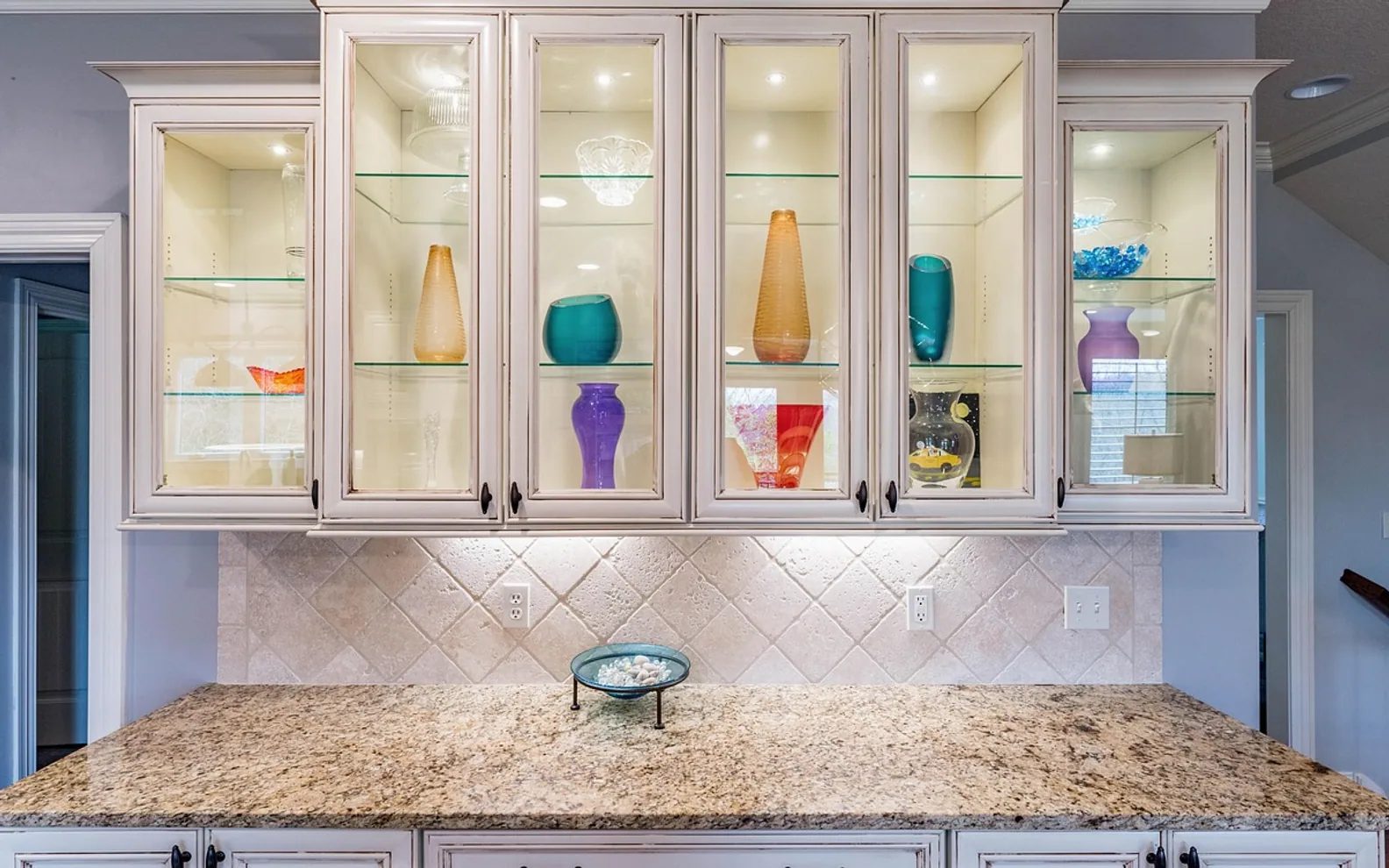
Ceiling lights have one awkward habit in the kitchen: they sit behind you, so your own shoulders cast a shadow over the chopping board. Lights mounted beneath the wall cabinets fix that in a single move. They throw light straight onto the counter, make the backsplash glow in the evening and give the whole room a softer, more finished feel when the main lights are off.
The choice can look crowded at first, but it narrows quickly once you know what each style does well.
The main styles at a glance
| Style | Best at | Worth knowing |
|---|---|---|
| LED strip | Even, continuous light along long runs | Flexible and slim; a diffuser channel hides the individual dots |
| Puck | Focused pools of light | Great for accents and display shelves; can leave gaps between pools |
| Bar / linear fixture | Clean, uniform task light | Comes in set lengths that often link together |
| Battery-powered | Quick upgrades with no wiring | Ideal for renters; batteries need changing or recharging |
Start with how you use the counter
A baker who rolls dough on the same stretch of worktop every weekend needs bright, even light there, so a strip or bar running the full length of the cabinet makes sense. Someone who mainly wants a gentle glow for late-night tea might prefer a few dimmable pucks. Corner coffee stations, open shelving and glass-front cabinets all benefit from pucks or short bars that highlight one spot rather than flooding the room.
Mount the fittings toward the front edge of the cabinet rather than against the wall. The light then lands where your hands work instead of only washing the tiles.
Colour, brightness and control
Colour temperature changes the mood more than people expect. Warmer white tones feel cosy and suit wood, cream and brass; cooler whites look crisp against white gloss, steel and stone and make it easier to judge food colour while cooking. Many modern fittings let you switch between tones, which is useful in an open-plan space that doubles as a dining area.
Dimming is the other feature worth paying for. Full brightness for prep, low light for evenings, and a night-light setting for a midnight glass of water all come from the same fittings. Motion sensors are handy too: walk in with full hands and the counter lights itself, then switches off when the kitchen is empty.
Plug-in, hardwired or battery
Hardwired systems give the tidiest result, with no visible cables and a single wall switch; they are a job for a qualified electrician. Plug-in kits suit kitchens with a convenient outlet near the cabinets and are an easy weekend project. Battery and rechargeable units need no tools beyond a screwdriver or adhesive pads and are the friendliest option for rented homes.
For a wide selection in one place, the under cabinet lighting range from a dedicated lighting maker brings strips, pucks and linkable bars together, which makes it easier to match fittings across a whole kitchen in one finish and colour temperature.
A quick planning checklist
- Measure each cabinet run and note where outlets and switches sit.
- Decide whether you want continuous light, spots, or a mix of both.
- Pick one colour temperature for the whole room so the counters look consistent.
- Check the fittings are rated for kitchen use and easy to wipe clean.
- Plan cable routes before mounting anything so wires stay hidden.
Get these basics right and the result feels built-in rather than added on: brighter prep, a warmer room at night and a kitchen that looks good from the sofa as well as at the stove.