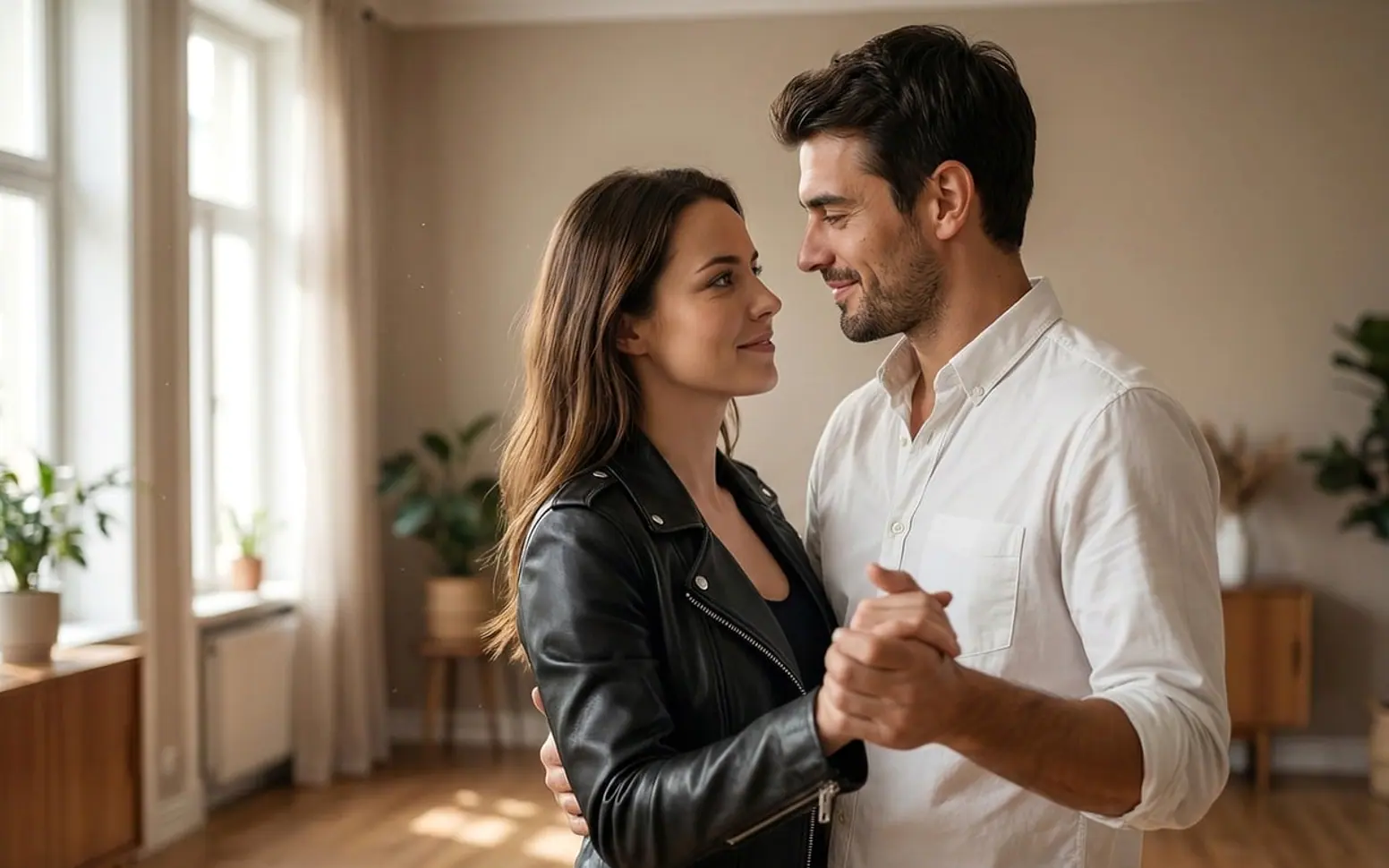
Plenty of people would love to dance but feel self-conscious in a class full of strangers. Learning at home takes that pressure away. Nobody is watching, you can repeat a step as many times as you like, and you can practise in comfortable clothes at any hour that suits you.
Here is a practical way to learn to dance at home, from setting up a small space to choosing a style and keeping your motivation steady.
Make a small, safe space
You do not need a large room. A clear patch of floor about the size of a rug is enough for most beginner routines. Before you start:
- Clear trip hazards such as cables, toys, low tables and loose rugs.
- Check the floor. Wood or laminate is easier for turns than thick carpet; very slippery tiles can be risky.
- Think about footwear. Clean trainers with some grip suit most styles. Socks can slide too much on smooth floors.
- Consider the neighbours. If you live above someone, a folded mat helps soften jumps.
A mirror is helpful but not essential. A darkened window in the evening or a phone camera propped on a shelf does the same job.
Choose a style that excites you
Motivation matters more than picking the "right" style. If you love a genre of music, start with the dance that goes with it. Some styles are especially friendly for home learning:
| Style | Why it suits home practice | Good to know |
|---|---|---|
| Hip hop and street styles | Plenty of beginner grooves, works in small spaces | Focus on bounce and rhythm before tricks |
| Salsa and bachata basics | Footwork can be learned solo | Partner work comes later |
| Contemporary and jazz | Builds flexibility and expression | Warm up well before stretching |
| Line dancing | Clear, repeating step patterns | Easy to practise with family |
| Swing and Charleston | Joyful, upbeat and playful | Kicks need a little extra room |
Use tutorials wisely
Online lessons are the backbone of learning at home, but it is easy to drift from one video to the next without learning anything properly. A few habits help:
- Pick one teacher or series for a few weeks so the explanations build on each other.
- Slow it down. Many video players allow reduced speed. Learn the steps slowly, then bring the tempo up.
- Mirror or follow. Check whether the teacher is facing you or facing away, so you know which foot to move.
- Break it into chunks. Learn eight counts at a time, then join them together.
- Stop and replay. Rewinding a tricky section ten times is completely normal.
Learn to hear the beat
Many beginners worry more about steps than timing, yet rhythm is what makes dancing look like dancing. Put on a song and simply clap or tap your foot along. Most popular music is counted in groups of eight. Try to find the "one", usually where the music feels heaviest, and count out loud as you move.
Once the counting feels natural, try stepping side to side on every beat. It sounds basic, but a relaxed, on-time step with a little bounce already looks like a dancer.
Build a practice playlist
Choose songs with a clear, steady beat for practice and save the complicated tracks for later. Sorting them from slower to faster gives you a natural progression. If you need help putting a good list together, our guide on how to make a playlist people actually enjoy covers ordering songs by energy, which works beautifully for dance practice too.
Warm up and cool down
Dancing is exercise, so treat it that way. Spend a few minutes moving gently before you start: march on the spot, roll your shoulders, circle your hips and ankles. Afterwards, walk around and stretch lightly while your muscles are warm. If you have an injury, a health condition or have not exercised in a long time, check with a medical professional before starting anything strenuous, and stop if something hurts.
Record yourself, kindly
Filming a short clip is one of the fastest ways to improve. It shows you things you cannot feel, such as stiff arms or a habit of looking at your feet. Watch it with the same kindness you would offer a friend. Pick one thing to work on next time rather than a long list of faults.
Keep it social when you are ready
Learning at home does not have to mean learning alone forever. Teach a simple routine to your children, practise a line dance with a flatmate, or invite friends for a relaxed evening of music and moving furniture. Many people find that once their confidence grows at home, joining a class or a social dance night feels far less daunting.
A simple four-week plan
- Week one: find the beat in different songs and practise a basic step.
- Week two: learn one short beginner routine, eight counts at a time.
- Week three: add arms, turns or styling to that routine.
- Week four: perform the full routine to music, record it and celebrate.
Short, regular sessions beat occasional marathons. Fifteen minutes before dinner, a few evenings a week, can carry you a surprisingly long way.