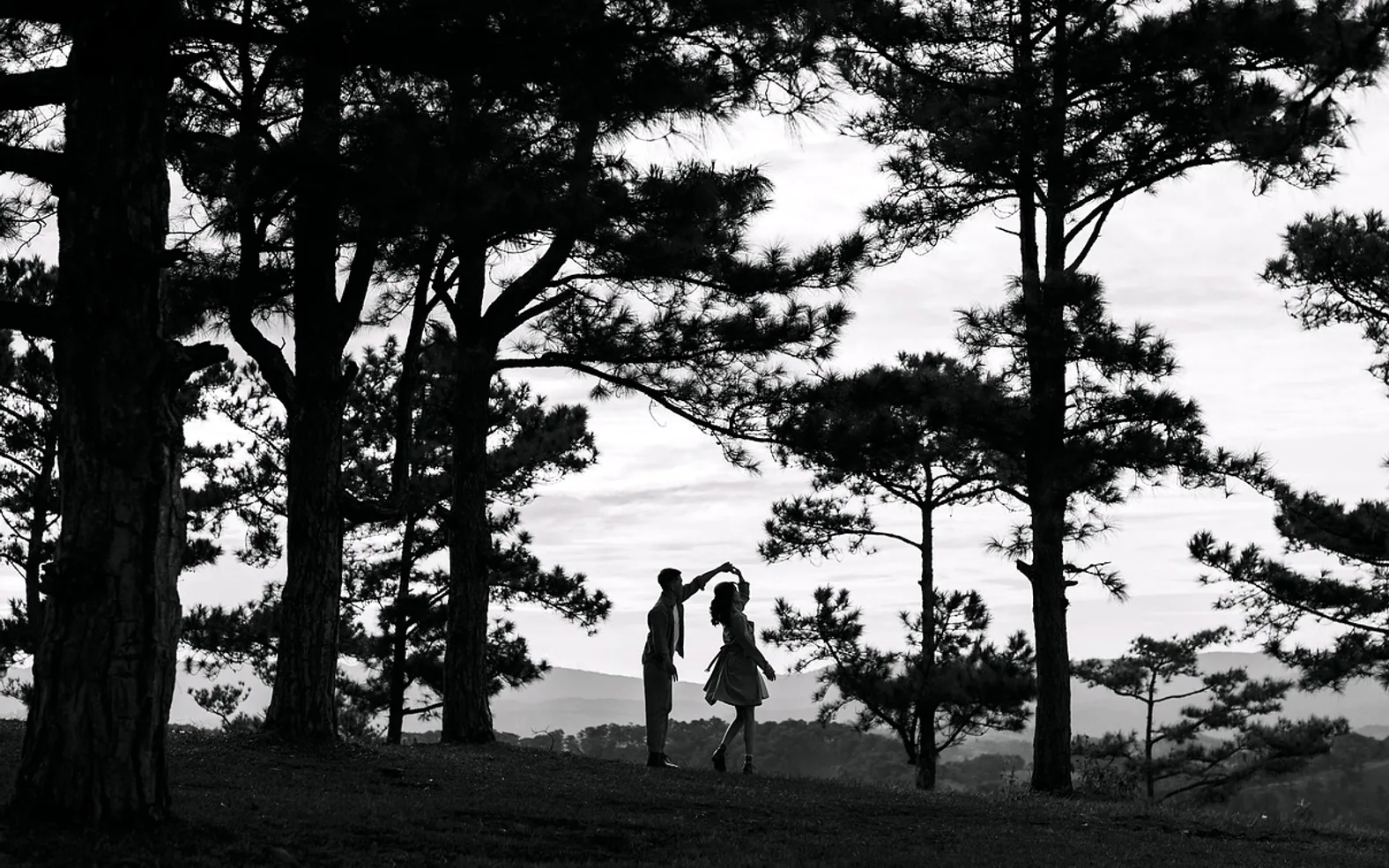
To slow dance, face your partner, choose a comfortable hold, and shift your weight gently from one foot to the other in time with the music, taking small steps and turning slowly as a pair. That simple sway is all most slow songs need. Once it feels natural, you can add a box step or a gentle turn to make it look more polished.
Pick a hold that suits the moment
How you hold each other sets the mood and the amount of control you have. Three holds cover almost every situation:
| Hold | How it works | Best for |
|---|---|---|
| Shoulders and waist | One partner rests hands on the other's shoulders; the other places hands lightly on the waist | Casual parties, school dances, relaxed sways |
| Classic closed hold | Leader's right hand on the partner's shoulder blade, left hands joined at shoulder height; partner's left hand on the leader's upper arm | Weddings, formal events, adding turns |
| Close embrace | Arms around each other, cheeks or shoulders close | Couples who know each other well |
Whatever the hold, keep elbows soft and shoulders down. Stiff arms make the dance feel like a wrestling match.
The basic sway
- Stand slightly offset. Place your feet so they sit a little to the side of your partner's feet, not directly toe to toe. This one adjustment prevents most trodden toes.
- Find the beat. Listen for the steady pulse and count it quietly.
- Shift your weight. On one beat, move your weight onto the left foot. On the next, move it onto the right. Your feet can stay in place or take tiny side steps.
- Slow it further if needed. For very slow ballads, change feet on every other beat instead of every beat.
- Breathe and relax. A small bend in the knees makes the sway look natural rather than robotic.
If keeping time is the hard part, spend ten minutes with our guide on how to find the beat in music before the big night.
Turning together
A slow dance that stays in one spot can feel static. To rotate, the leader takes slightly larger steps on the outside of the turn and smaller ones on the inside, so the couple pivots gradually, about a quarter turn over several beats. Think of it as drawing a slow circle together rather than spinning. Keep checking the space behind your partner so you do not back them into a table or another couple.
Upgrade: the box step
The box step, borrowed from ballroom dancing, traces a small square on the floor and suits most slow songs in 4/4 or waltz time.
- Leader steps forward with the left foot.
- Right foot steps to the side.
- Left foot closes to the right.
- Right foot steps back.
- Left foot steps to the side.
- Right foot closes to the left.
The partner mirrors it, starting back with the right foot. Practise it without music first, then with a slow song, until it feels like walking.
Planning a first dance at a wedding
A first dance is the one slow dance people actually plan for, and a little preparation turns nerves into enjoyment.
- Choose a song with a clear, steady pulse. Lovely lyrics are not enough if the beat is hard to hear.
- Consider trimming it. Many couples fade the track after a couple of minutes and invite guests to join, which takes the pressure off.
- Practise in the shoes and outfit you will wear. A long dress, a train or stiff new shoes change how you move.
- Map out a few moments. Plan where you start, one turn, and how you finish. You do not need full choreography.
- Save dips for rehearsed moves. A dip looks romantic only when both partners know it is coming and have tried it safely.
- Look at each other, not your feet. Guests remember smiles more than steps.
Couples who want something a little livelier sometimes choose a romantic bachata instead; our comparison of salsa vs bachata explains the basic step.
Slow dancing at a party
When the music slows down at a party, a few manners help everyone feel at ease. Ask rather than assume, accept a "no thanks" gracefully, and keep the hold appropriate to how well you know each other. Light conversation is fine; you are not being judged on technique. If you are hosting and want the slow songs to land well, place them thoughtfully in the evening's running order, as suggested in our guide on making a playlist people actually enjoy.
Mistakes to avoid
- Taking big steps that pull both of you off balance.
- Standing toe to toe instead of slightly offset.
- Locking the arms straight.
- Staring at the floor.
- Trying a complicated move you have only seen in a film.
Short answers
Who leads in a slow dance?
Either partner can. Traditionally one person leads the direction and turns, but many couples simply agree on who steers, or take turns.
What if I cannot dance at all?
The sway is enough. Practising a few minutes at home with a favourite song builds confidence quickly, and our guide on how to learn to dance at home has more ideas.
What songs work for slow dancing?
Ballads with a steady, unhurried pulse, whether in 4/4 or a lilting three-beat waltz time. Avoid tracks that speed up, stop or change feel halfway through.